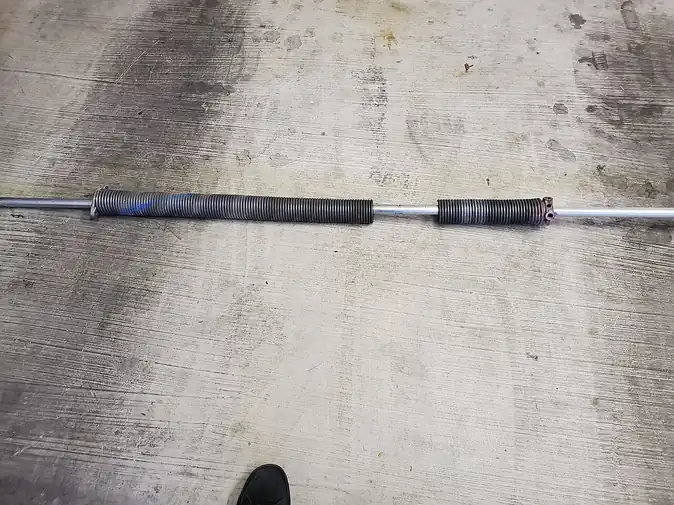
In 30 years of repairing garage doors across British Columbia and Greater Vancouver, I've seen thousands of broken springs. They're the most common failure point, and they're also the most misunderstood. This guide cuts through the marketing fluff to give you the real numbers on how springs work, how long they last, and why you should never attempt a DIY replacement.
We'll cover torsion versus extension springs, cycle ratings, costs in Canadian dollars, and what our harsh winters do to spring steel. By the end, you'll know exactly when to call a pro and how to choose the right spring for your door.
boltKey Takeaways
- Standard torsion springs last 10,000 cycles, roughly 13 years at 2 cycles/day.
- Extension springs wear faster and are less durable in Canadian climates.
- DIY spring replacement is extremely dangerous due to stored energy.
- High-cycle springs (20,000–50,000 cycles) are worth the upgrade for frequent use.
- Spring replacement in Canada costs CAD $200–$700 depending on door size and type.
- Canadian winters increase spring failure risk; regular lubrication and balance checks help.
How Garage Door Springs Work: Torsion vs Extension
Garage door springs counterbalance the weight of the door, making it easy to lift manually or with an opener. There are two main types: torsion springs and extension springs.
Torsion Springs
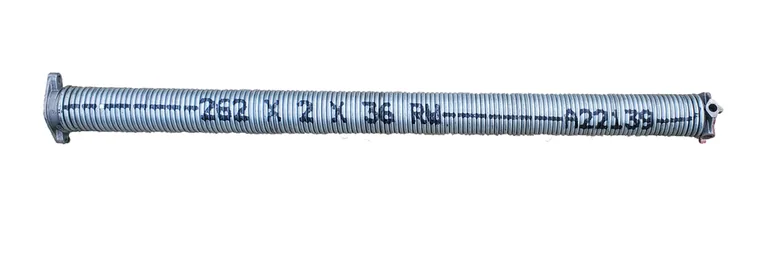
Mounted horizontally above the door opening on a steel shaft, torsion springs twist (torque) to store energy. As the door closes, the springs wind up; as it opens, they unwind, releasing stored energy to lift the door. A standard residential torsion spring is typically rated at 10,000 cycles — one cycle equals one full open and close. At about 2 cycles per day, that's roughly 13–14 years; at 4 cycles per day, it drops to 6–7 years. In BC, where many homes have attached garages used multiple times daily, I often see springs fail in 5–8 years.
Extension Springs
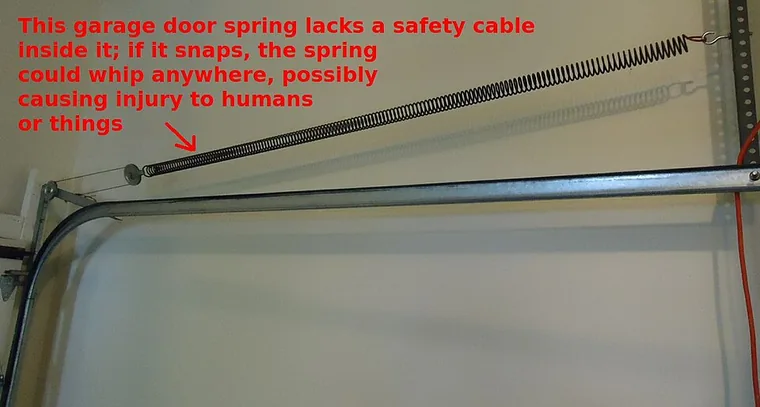
Extension springs are mounted on both sides of the horizontal tracks, parallel to the door. They stretch as the door closes and contract as it opens. While similar in basic cycle rating, extension springs wear faster in practice because they rely on repeated stretching and contracting, and they're more exposed to dirt and weather. Torsion springs are generally the more durable design.
For most Canadian homes, especially in climates with freeze-thaw cycles, I recommend torsion springs. They're safer, last longer, and are easier to balance. If you need professional help, garage door spring repair is something you should leave to a Red Seal technician.
Common Misconceptions
- “Bigger spring means stronger” — Actually, spring strength depends on wire gauge and coil count, not length.
- “Extension springs are safer because they’re visible” — False; without safety cables, a broken extension spring can become a projectile.
Spring Lifespan in Cycles: What 10,000 Cycles Really Means
A cycle rating is the number of open-close operations a spring is designed to endure before metal fatigue causes failure. For residential torsion springs, the standard is 10,000 cycles. But that number can be misleading.
Real-World Math
If your household uses the garage door twice a day (one morning exit, one return), a 10,000-cycle spring lasts about 13.7 years. But if you have a busy family with four trips per day, life expectancy drops to under 7 years. In commercial settings or homes with frequent use, springs can fail in 2–3 years. I've replaced springs in Vancouver condos that failed in 18 months due to daily use by multiple residents.
Factors That Reduce Cycle Life
- Poor balance: If the door is heavy or misaligned, the spring works harder. A door that's out of balance can reduce spring life by 50%.
- Rust and corrosion: Especially in coastal BC, salt air accelerates fatigue. Springs near the ocean may fail in 5–7 years even with light use.
- Extreme cold: While the cycle rating doesn't change, cold makes steel brittle and less forgiving. I see a spike in spring breaks when temperatures drop below -10°C.
- Improper installation: Wrong spring size or winding can cause premature failure. Using a spring with incorrect wire gauge leads to early fatigue.
If your door is used more than average, or you live in a harsh climate, consider a high-cycle spring. And remember, garage door repair in Vancouver often involves replacing springs that failed earlier than expected due to our damp winters.
Signs of Spring Failure: When to Call a Pro
Springs don't fail without warning. Here are the signs I've seen in thousands of service calls across BC.
Visual Clues
- Gap in the spring coil: A broken torsion spring will have a visible gap between coils. If you see one, the spring is already compromised.
- Door won't open or close fully: If the door is stuck, the spring may be broken or severely weakened. In many cases, only one of two springs breaks, causing the door to tilt.
- Door feels heavy: If manual lifting requires more effort, the spring has lost tension. A properly balanced door should lift with one hand.
- Loud bang: A sudden, loud noise from the garage often means a spring snapped. The sound can be startling, but don't panic — just don't use the door.
What to Do
- If the door is stuck, do not force it. Disconnect the opener and leave the door closed.
- Inspect visually for gaps or broken parts. Do not touch the spring.
- Call a professional immediately. Springs store lethal energy — a 10,000-cycle torsion spring can release over 1,000 foot-pounds of force.
In 30 years, I've seen too many DIY attempts end in injury. If you hear a bang or see a gap, schedule garage door spring repair right away.
Why DIY Spring Replacement Is Dangerous
I cannot overstate this: do not attempt to replace garage door springs yourself. Torsion springs store immense mechanical energy — enough to lift a 400-pound door. A slip during winding can cause the spring to release with catastrophic force.
The Risks
- Severe injury or death: The spinning spring bar can break bones or cause blunt trauma. In BC, there have been multiple fatalities from DIY spring work.
- Door drop: Improper tension can cause the door to crash down, damaging property or injuring someone. A 16-foot steel door weighs 300–400 lbs.
- Opener damage: An unbalanced door strains the opener, leading to costly repairs. Openers are not designed to lift the full door weight.
Why Pros Are Essential
Springs must be matched to the door's weight and height. Incorrect sizing leaves the door unbalanced or creates a dangerous release. Professional technicians use winding bars, proper safety cables, and torque settings. For residents in the Fraser Valley, garage door repair Surrey services have the experience to do it safely.
Torsion vs Extension: Which Is Better for Canadian Homes?
Both types work, but for Canadian climates, torsion springs are superior. Here's why.
Durability
Torsion springs are enclosed above the door, protected from rain, snow, and road salt. Extension springs are exposed on the tracks, making them prone to rust and ice buildup. In BC's coastal damp or Prairie dry cold, torsion springs last longer. I've seen extension springs fail in 3–4 years in Vancouver due to corrosion.
Safety
Torsion springs are contained on a shaft; if they break, the pieces stay on the bar. Extension springs can fly off if a safety cable isn't installed, posing a hazard. Many older homes in BC lack safety cables, making extension springs a ticking time bomb.
Balance
Torsion systems provide smoother operation and better balance. Extension springs often cause the door to jerk or sag over time. For double-wide doors (16 ft), torsion is the only reliable choice.
If your home has extension springs, consider upgrading to torsion when they fail. It's a common request for garage door repair in Vancouver.
High-Cycle Springs: Are They Worth the Upgrade?
Standard 10,000-cycle springs are fine for average use, but high-cycle springs offer longer life. Common upgrades are 20,000 cycles and 30,000–50,000 cycles, with some premium options at 100,000 cycles.
Why Upgrade?
- Lower lifetime cost: Fewer replacements mean fewer service calls. Over 20 years, a 20,000-cycle spring may save you $200–$400 in labour.
- Reduced downtime: Less frequent failures, especially for busy households. In commercial settings, downtime can cost hundreds per hour.
- Better for harsh climates: Higher-cycle springs are often made with thicker wire or better steel, resisting cold-weather fatigue. In Prince George, where winter temps hit -30°C, high-cycle springs are standard.
Cost vs Benefit
A high-cycle spring may cost 30–50% more upfront, but if you use your door 4+ times daily, it pays off in 5–7 years. For a typical home, a 20,000-cycle spring is a good balance. Ask your technician about options when scheduling garage door spring repair.
Cost to Replace Garage Door Springs in Canada (CAD)
Prices vary by region, door size, and spring type. Based on typical BC market rates:
Typical Costs
- Single torsion spring replacement: CAD $200–$450
- Two-spring system (common for double doors): CAD $300–$700
- High-cycle upgrade: Add $50–$150 per spring
- Emergency or after-hours service: Additional $100–$200
What's Included
A professional replacement includes proper spring sizing, winding, safety cables, and balance testing. Cheaper quotes may skip these steps. For residents in the Lower Mainland, garage door repair Surrey offers competitive pricing with Red Seal certified technicians.
Hidden Costs to Avoid
- Cheap springs: Some companies use undersized springs to save money, reducing lifespan.
- No safety cables: Extension springs must have cables; if not included, you'll need them later.
What Canadian Winters Do to Spring Steel
Cold weather doesn't change the cycle rating, but it makes spring steel less forgiving. Here's what happens.
Cold Effects
- Increased brittleness: Steel becomes harder and more prone to cracking under stress. At -20°C, the fracture toughness drops significantly.
- Contraction: Metal shrinks in cold, potentially throwing off balance. A 10°C drop can reduce spring length by 0.1%, affecting tension.
- Moisture and corrosion: Freeze-thaw cycles cause rust, which accelerates fatigue. Road salt from driveways accelerates this in urban areas.
Winter Mitigation
- Lubricate springs with silicone spray annually before winter. Avoid WD-40, which dries out.
- Keep the door balanced — test by disconnecting the opener and lifting halfway; it should stay put.
- Consider high-cycle springs if your door is exposed to extreme cold. In Fort St. John, I recommend 20,000-cycle springs as baseline.
In 30 years, I've seen more spring failures in January and February than any other months. If your door is struggling in the cold, call garage door repair in Vancouver before it snaps.
Frequently Asked Questions
How do I know if my garage door spring is broken?
Look for a visible gap between coils on a torsion spring, or a stretched/separated extension spring. The door may also be heavy or stuck.
Can I replace a garage door spring myself?
No. Torsion springs store lethal energy and require specialized tools and training. Always hire a Red Seal certified technician.
How much does it cost to replace a garage door spring in Canada?
Typically CAD $200–$450 for a single spring, $300–$700 for a double spring system, plus extra for high-cycle upgrades or emergency service.
Do high-cycle springs last longer in cold weather?
Yes, because they are often made with thicker wire or better steel, which resists cold-induced brittleness better than standard springs.
Need a Hand From a Real Technician?
Same-day garage door repair across Greater Vancouver — no call-out fee, written estimate before we start.
call Call 778-805-4911