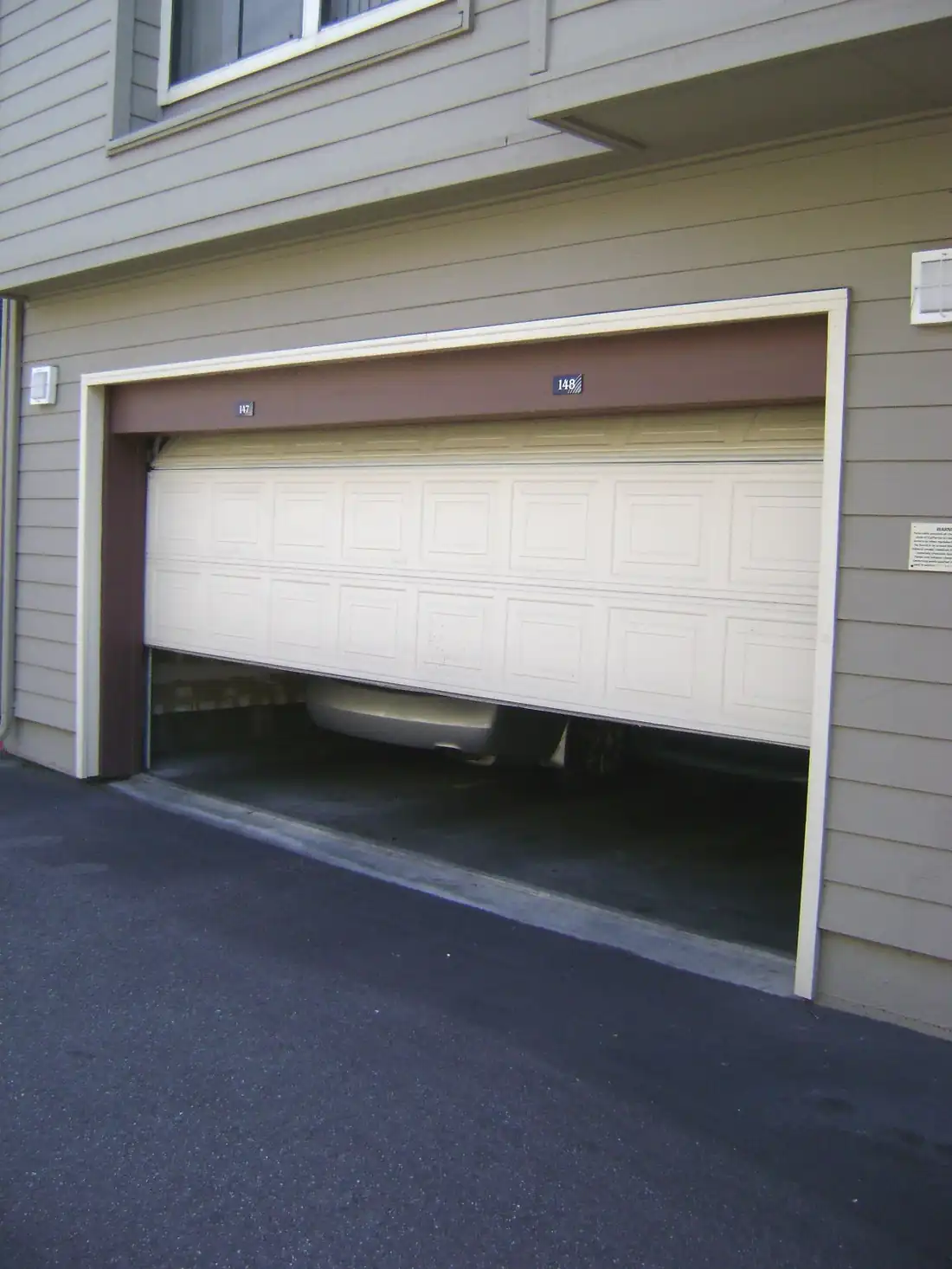
In 30 years of servicing garage doors across British Columbia and Greater Vancouver, I've seen off-track doors cause everything from minor panel dings to catastrophic failures. An off-track door is not just an inconvenience—it's a safety hazard. The moment a door comes off its tracks, the system is compromised: rollers can bind, cables can snap, and the door can fall unevenly, potentially injuring someone or damaging your vehicle. Most homeowners don't realize that continuing to operate the door—even a little—can turn a simple fix into a costly replacement.
This guide covers the real-world causes of off-track doors, why you must never force or operate it, the difference between track realignment and replacement, roller types (nylon vs. steel), typical costs in Canadian dollars, and why this is almost always a same-day professional fix. Whether you need garage door repair in Vancouver or garage door repair Surrey, knowing these basics will help you make the right call fast.
boltKey Takeaways
- Never operate an off-track door—it can cause serious injury or escalate damage.
- Common causes: broken cables, worn rollers, loose bolts, vehicle impact, bent tracks, debris.
- Track realignment costs $100–$200; replacement runs $350–$650 per track section.
- Nylon rollers are quieter and better for BC's climate; steel rollers rust and are noisier.
- Off-track repairs are same-day emergencies—call a professional immediately.
- Regular lubrication and bolt tightening prevent most off-track issues.
Common Causes of an Off-Track Garage Door
An off-track door doesn't happen by accident. In my experience, these six causes account for nearly every call I've taken across BC's coastal and interior regions.
Broken or Loose Lift Cables
The lift cables are under constant tension. When a cable breaks—often due to rust from our damp coastal air or fraying from age—the door lifts unevenly, pulling one side off the track. I've seen this happen with doors only five years old in Vancouver, where salt air accelerates corrosion. A broken cable is a red flag: never operate the door, as the remaining cable can snap under the extra load.
Worn or Broken Rollers
Rollers take a beating. Over time, nylon rollers can crack or chip, especially in cold snaps below -15°C that make them brittle. Steel rollers rust and develop flat spots, causing jerky movement that eventually derails the door. In Surrey, I replaced a set of steel rollers that had rusted solid after just three winters of road salt exposure. Worn rollers are the #1 cause of off-track doors I see in residential homes.
Loose Track Bolts and Hardware
Vibration from daily operation loosens the bolts that hold track brackets to the wall. Once a bracket shifts even 1/8 inch, the track alignment changes, and the door can pop off. This is especially common in Langley, where many homes have older wooden frames that allow bolts to work loose over time. Regular tightening is a simple DIY check, but once the door is off track, call a pro.
Vehicle Impact
A car bump—even a slow one—can bend the bottom track or knock the entire door out of alignment. I've seen tracks bent inward by just 1/4 inch that caused the door to jam halfway. In BC, where many garages double as storage, a misplaced bike or snow shovel can also cause impact damage. Always check the track after any garage incident.
Bent or Misaligned Track
Tracks can bend from impact, settling foundation, or even a heavy snow load on the door. On the coast, damp weather can cause wooden jambs to swell, pushing tracks out of true. Even a slight bow in the vertical track forces rollers to fight their way up, and eventually they pop out. I always check track alignment with a level; anything more than 1/8 inch off requires attention.
Debris or Obstruction
Dirt, pebbles, tools, or even a child's toy left in the track can stop a roller dead. When the opener keeps pulling, the door derails. In BC's rainy season, mud and grit wash into tracks, especially if the garage floor slopes. A quick visual sweep of the tracks can prevent this, but once the door is off, don't try to clear the debris while the door is under tension.
Why You Must Never Force or Operate an Off-Track Door
I cannot stress this enough: an off-track door should not be operated—not even a few inches. Here's why.
Risk of Sudden Failure
When a door is off track, the rollers are not in their proper channels. Forcing the door can cause a roller to bind against the track, bending it further or snapping the roller stem. The door may then drop unevenly, potentially pulling the cables off their drums. I've seen a homeowner try to "help" the door up, only to have the entire panel crash down, shattering a window and denting their car. The tension in the springs is enormous—enough to cause serious injury if released suddenly.
Damage Escalation
A minor misalignment can quickly become a major repair. Operating the door while off track can bend the track beyond repair, crack panels, or snap cables. What might have been a $150 realignment can turn into a $800+ replacement of track, cables, and rollers. In one Langley job, a homeowner tried to force the door closed; the result was a twisted track and a broken spring—total cost over $1,200.
Safety Guidance
Repair sources universally advise: disengage the opener using the emergency release cord (red handle), and do not attempt to lift or lower the door manually. Secure the area so no one walks under the door. Then call a professional. In BC, where many homes have insulated doors that are heavier than standard, the risk is even higher. Never put yourself or your family at risk for the sake of a quick fix.
Track Realignment vs. Replacement: What's Needed?
Not every off-track door needs new tracks. Here's how I decide between realignment and replacement.
When Realignment Works
If the track is simply loose on the wall or slightly out of position (less than 1/4 inch misalignment), realignment is usually sufficient. The process: loosen the track bracket bolts, tap the track back into proper alignment with a rubber mallet, check with a level, and retighten. This takes about 30–45 minutes and costs $100–$200 in the Vancouver area. I've done hundreds of these; they're straightforward and reliable if the track steel is intact.
When Replacement Is Necessary
If the track is heavily bent, dented, or kinked—especially from vehicle impact—replacement is the safer bet. Hammering a bent track back into shape weakens the metal and often leaves a slight bow that will cause future problems. Replacement involves removing the old track, installing a new one, and realigning the entire system. Cost: $200–$400 per track section, plus labor. In Surrey, I replaced a bottom track that had a 2-inch dent from a car bumper; the homeowner had tried to bend it back, but the door kept binding. New track solved it permanently.
Climate Considerations
On the BC coast, damp conditions can cause track brackets to rust, making them brittle. I always inspect brackets for rust when I do a realignment. If they're compromised, I recommend replacement. In the interior, dry cold can cause steel to contract, sometimes loosening bolts—a simple tighten may suffice. But if the track itself is damaged, replace it.

Nylon vs. Steel Rollers: Which to Choose?
Roller choice matters more than most homeowners think. Here's the breakdown from my field experience.
Nylon Rollers
Nylon rollers are the default for residential doors in BC for good reason: they're quiet. They don't clatter like steel, and they resist rust. In Vancouver's humid climate, steel rollers can develop surface rust within a year, leading to noise and drag. Nylon also handles cold better than many assume—I've seen them perform well down to -20°C in the Fraser Valley. However, they can crack if impacted hard or if they're low-quality. I recommend 13-ball bearing nylon rollers for most homes; they cost about $15–$25 each and last 10–15 years.
Steel Rollers
Steel rollers are tougher and can handle heavier doors (e.g., commercial or oversized). But they're noisy, prone to rust, and can develop flat spots if the door is left in one position for months. In coastal BC, I only recommend steel for doors over 16 feet wide or with high-cycle use. They cost $10–$20 each but may need replacement sooner due to corrosion. For most homeowners in Langley or Surrey, nylon is the better choice.
My Recommendation
For noise-sensitive residential use in Canada, go with nylon. They're quieter, last longer in our climate, and reduce strain on the opener. If you have a heavy door or high traffic, consider steel but plan for more noise and maintenance. When replacing rollers after an off-track incident, upgrade to nylon—it's a small investment that pays off in peace and quiet.
Costs in CAD: What to Expect for Off-Track Repairs
Prices in BC vary by city and complexity. Here are typical ranges I see in 2025.
- Service call fee: $75–$150 (most companies charge this to come out, often waived if you proceed with repair).
- Track realignment: $100–$200 (includes tightening brackets and tapping track back into position).
- Track replacement (per section): $200–$400 plus labor ($150–$250). Total: $350–$650 per track.
- Roller replacement (set of 10–12): $150–$300 for nylon, $100–$200 for steel (plus labor).
- Cable replacement: $100–$200 per cable (two cables often needed).
- Full off-track repair (common scenario): $250–$600 depending on damage. Includes realignment, roller replacement, cable check, and safety inspection.
In Vancouver, expect higher labor rates ($125–$175/hour) than in Surrey or Langley ($100–$150/hour). Always get a written estimate before work begins. Most reputable companies offer same-day service for off-track doors—this is not a repair to schedule for next week, as the door is unsafe.
Why This Is Usually a Same-Day Professional Fix
An off-track door is a safety emergency. Here's why you should call a pro immediately.
Safety Risks
The door is under extreme spring tension. Attempting DIY can cause serious injury or death. I've seen homeowners lose fingers trying to force rollers back into tracks. The cables can snap with enough force to cut through drywall. A professional has the tools and training to safely release tension and realign the system.
Same-Day Service Is Standard
Most garage door companies in BC offer same-day service for off-track issues because they know the urgency. In 30 years, I've never had a customer wait more than 24 hours for an off-track repair—and that was during a snowstorm in the Interior. In Vancouver, Surrey, and Langley, you can usually get a technician out within 4–6 hours. The cost is worth the peace of mind.
Prevent Further Damage
Every hour the door is off track, the risk of additional damage grows. Wind can shake the door, causing more misalignment. Rain can rust exposed cables. If you have an automatic opener, disengage it and leave the door alone. A quick pro fix today saves you hundreds tomorrow. For reliable service, search for garage door repair Langley or your local area.
Step-by-Step: What to Do When Your Door Goes Off Track
Follow these steps to stay safe and prevent further damage.
- Stop using the door immediately. Do not try to open or close it. Disconnect the automatic opener by pulling the emergency release cord (red handle).
- Secure the area. Keep people and pets away from the door. If the door is partially open, do not walk under it.
- Inspect from a safe distance. Look for obvious causes: a broken cable, a bent track, or debris. Do not touch any components.
- Call a professional. Describe what you see. Most companies can diagnose over the phone and bring the right parts.
- Wait for the technician. Do not attempt any repairs yourself. Even if the door looks simple to fix, the spring tension is dangerous.
This procedure has kept my customers safe for decades. Follow it, and you'll avoid turning a minor issue into a major expense.
Prevention Tips for Canadian Homeowners
Preventing an off-track door starts with regular maintenance, especially in our climate.
- Lubricate rollers and tracks twice a year. Use a silicone-based spray (not WD-40) in spring and fall. On the coast, do it more often if you see rust.
- Tighten track bolts annually. Check the brackets where the track meets the wall. A 1/4-inch socket driver is all you need.
- Inspect rollers for wear. Look for cracks, chips, or flat spots. Replace any damaged rollers immediately.
- Keep tracks clean. Sweep out dirt, leaves, and debris. In winter, clear ice buildup from the bottom track.
- Test balance monthly. Disconnect the opener and manually lift the door halfway. It should stay put. If it falls, call a pro to adjust springs.
These simple steps can extend your door's life by years. I've seen well-maintained doors last 25+ years in BC's climate. A little prevention goes a long way.
Frequently Asked Questions
Can I fix an off-track garage door myself?
No. The door is under high spring tension, and DIY attempts can cause serious injury or worsen damage. Always call a professional.
How much does it cost to fix an off-track garage door in BC?
Typical costs range from $250 to $600 CAD, depending on damage. Track realignment is $100–$200; roller or cable replacement adds more.
What should I do immediately if my door goes off track?
Stop using the door, pull the emergency release cord to disengage the opener, secure the area, and call a garage door technician.
How long does an off-track repair take?
Most repairs are completed in 1–2 hours. Same-day service is standard across BC.
Need a Hand From a Real Technician?
Same-day garage door repair across Greater Vancouver — no call-out fee, written estimate before we start.
call Call 778-805-4911