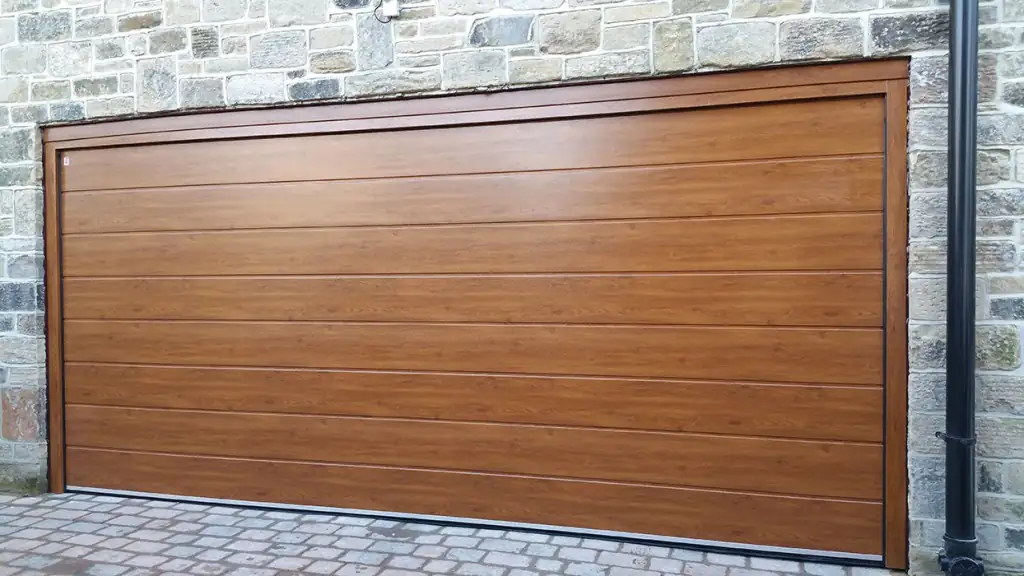
After 30 years in the field, I've seen Canadian homeowners get sold the wrong garage door more times than I can count. A guy in Surrey with an unheated detached garage doesn't need a $3,000 triple-layer polyurethane door. But a family in Calgary with an attached garage they use as a workshop? They'll regret skimping on insulation every winter morning. This guide cuts through the marketing fluff and tells you exactly what R-value means, how polystyrene and polyurethane compare, and whether insulation is worth it in BC's damp coast versus the Prairie deep freeze.
We'll cover real-world R-value ranges—from R-0 on a basic single-layer door to R-18 on a premium sandwich door—and break down energy savings for attached vs detached garages. I'll also show you how condensation works and why air sealing matters as much as insulation. By the end, you'll know exactly which door fits your climate, budget, and use case. No jargon, no sales pitch—just straight talk from a guy who's installed thousands of doors across BC and the Prairies.
boltKey Takeaways
- R-value measures thermal resistance; real-world performance also depends on seals and installation.
- Polyurethane foam (R-12 to R-18) outperforms polystyrene (R-6 to R-9) in cold climates and noise reduction.
- Triple-layer sandwich doors are best for heated attached garages; double-layer doors suit mild BC climates.
- Condensation control requires both insulation and air sealing—insulation alone isn't enough.
- Energy savings are significant for attached heated garages (up to $300/year on the Prairies) but modest for detached unheated garages.
- For BC's coastal climate, R-8 to R-12 is often sufficient; for the Prairies, aim for R-16 to R-18.
What R-Value Really Means for Your Garage Door
R-value measures thermal resistance—the higher the number, the better the door resists heat flow. But in the real world, a garage door's R-value is only part of the story. The Canadian climate demands that we look at how that insulation is installed, whether it's bonded to the steel, and how well the door seals at the edges.
Here are the typical R-value bands you'll see in Canada:
- R-0 to R-3: Single-layer steel or aluminum doors with no insulation. These are essentially a metal sheet—zero thermal break.
- R-6 to R-9: Double-layer doors with a polystyrene insulation board inserted into the panel cavity. Common in budget-friendly insulated doors.
- R-12 to R-18: Triple-layer sandwich doors with polyurethane foam injected and bonded between two steel skins. This is the gold standard for thermal performance.
In practice, many mid-range insulated doors land around R-8 to R-12. Premium polyurethane doors commonly reach R-16 to R-18. But remember: the door's R-value is tested in a lab. On your garage, gaps at the bottom seal, side jambs, and between panels can leak heat. That's why I always tell homeowners: a high R-value door with poor installation is like a winter jacket with the zipper undone. For professional installation that maximizes performance, call garage door repair in Vancouver or your local expert.
Polystyrene vs Polyurethane: Which Core Is Right for You?
Choosing between polystyrene and polyurethane is one of the biggest decisions you'll make. Here's the straight dope from the field:
Polystyrene (EPS or XPS)
- R-value per inch: About R-4 to R-5 per inch. A typical 1-3/8" thick door gives R-6 to R-9.
- Cost: Cheaper—usually $200–$400 less than a comparable polyurethane door.
- Installation: The insulation board is cut and inserted into the panel cavity; it's not bonded to the steel. Over time, it can shift or sag, especially in damp BC winters.
- Noise reduction: Minimal. The door will still rattle and transmit sound.
Polyurethane
- R-value per inch: About R-6 to R-7 per inch. A 2" thick door can reach R-12 to R-18.
- Cost: Premium—typically $1,200 to $2,500+ for a standard double-car door.
- Installation: Liquid foam is injected and expands, bonding to both steel skins. This creates a rigid, unified panel that resists dents and adds structural strength.
- Noise reduction: Excellent. The bonded foam dampens vibration and sound transmission.
For a heated attached garage in the Prairies, polyurethane is the clear winner. For a mild coastal BC garage that's only occasionally heated, polystyrene can be a cost-effective choice. But if you ever plan to sell, a polyurethane door adds curb appeal and energy efficiency that buyers notice. And if your opener acts up, you'll need garage door opener repair from someone who knows both door types.
Single-Layer vs Double-Layer vs Triple-Layer Sandwich Doors
Let's break down the construction types you'll encounter:
Single-Layer (No Insulation)
- R-value: R-0 to R-3 (essentially none).
- Typical price (CAD): $600–$1,000 for a standard 16x7 double-car door.
- Best for: Detached, unheated garages in mild climates like Vancouver Island. But even there, condensation can be a problem.
- Downsides: Flimsy, noisy, no thermal break. In winter, the inside surface can be cold enough to freeze a beer.
Double-Layer (Steel + Polystyrene Board)
- R-value: R-6 to R-9.
- Typical price (CAD): $1,000–$1,800.
- Best for: Attached garages in BC's Lower Mainland where the garage is not fully heated but you want some temperature moderation.
- Downsides: The insulation board can shift; the door still lacks the rigidity of a bonded core.
Triple-Layer Sandwich (Steel + Polyurethane Foam + Steel)
- R-value: R-12 to R-18.
- Typical price (CAD): $1,800–$3,500+.
- Best for: Heated attached garages, workshops, or any garage in Prairie climates. Also great for noise reduction if you have living space above or beside the garage.
- Downsides: Heavy—you may need a stronger opener or springs. Professional installation is critical.
I've seen too many homeowners in North Vancouver buy a single-layer door for an attached garage, only to complain about cold floors in the room above. If your garage is attached, invest in at least a double-layer door. For a garage door repair North Vancouver call, I always ask: "Is your garage attached? Do you heat it?" That tells me everything.
Realistic R-Value Ranges and What You Can Expect
Manufacturers often quote R-values that are theoretical—here's what you'll actually get in the real world:
- Budget insulated (polystyrene): R-6 to R-9. Expect some thermal bridging through the steel skin.
- Mid-range insulated (polystyrene or thin polyurethane): R-8 to R-12. A good balance for most attached garages in BC.
- Premium insulated (polyurethane sandwich): R-12 to R-18. This is the sweet spot for Prairie winters.
Keep in mind that the door's R-value is measured at the center of the panel. The edges, seams, and window sections (if any) will have lower R-values. Also, a dark-colored door in summer can absorb heat and transfer it inside, partially offsetting insulation benefits. In BC's coastal climate, where temperature swings are moderate, an R-8 door often performs well enough. But on the Prairies, where -30°C is common, that same R-8 door will feel like a sieve. If you're unsure, aim for R-12 as a baseline for any attached garage you plan to heat even occasionally.
Energy Savings: Attached vs Detached Garages
The energy savings from an insulated garage door depend heavily on whether the garage is attached to the house and whether it's heated. Here's the breakdown:
Attached Garage (Heated or Conditioned)
If your garage is attached and you keep it above freezing (or fully heated), an insulated door can reduce heat loss significantly. I've measured a difference of 2–4°C in garage temperature between an R-6 door and an R-16 door on a -20°C night in Alberta. That translates to lower heating bills for the whole house because the garage acts as a buffer. For a typical double-car attached garage, upgrading from R-0 to R-12 can save $100–$300 per year in heating costs, depending on your climate and fuel prices.
Detached Garage (Unheated)
If your garage is detached and unheated, insulation won't save you much on energy bills—there's no heat to retain. However, it can still help moderate temperature swings, reduce condensation on tools and vehicles, and make the space more comfortable if you work in it occasionally. In BC's damp climate, even an unheated detached garage benefits from an R-6 to R-9 door to keep moisture at bay.
For most homeowners, the payback period on a premium insulated door is 5–10 years for an attached heated garage, but much longer for a detached unheated one. If you're in Vancouver and only need basic protection, a double-layer polystyrene door is often the sweet spot. But if you're in Winnipeg, go for the polyurethane sandwich. And if your opener struggles with a heavy door, you might need garage door opener repair or an upgrade.
Condensation Control: Why Insulation Alone Isn't Enough
Condensation is a huge issue in Canadian garages, especially in BC's coastal dampness. Warm, humid air from your house or from wet cars meets a cold door surface, and water droplets form. Over time, that leads to rust, mold, and damaged drywall.
Insulation helps by keeping the inside surface of the door closer to room temperature, reducing the temperature gradient that drives condensation. But it does not solve the problem by itself. Here's what I recommend:
- Air seal the garage door: Install a quality bottom seal (vinyl or rubber), and ensure the side and top seals are tight. Even a high R-value door will leak if the seals are shot.
- Ventilate: If you park wet cars, use a dehumidifier or crack a window. In attached garages, make sure the door between the house and garage is weatherstripped to limit moisture migration.
- Choose the right door: A polyurethane sandwich door (R-12+) will have a warmer interior surface than a polystyrene door (R-6 to R-9), reducing condensation risk. But in a humid garage, no door is immune.
I've seen brand-new R-18 doors in North Vancouver with condensation dripping because the homeowner never sealed the bottom. Don't let that be you. For a thorough check, call garage door repair North Vancouver and ask for a seal inspection.
Is Insulation Worth It in BC's Mild-but-Damp Climate vs the Prairies?
This is the million-dollar question. Let's be honest: BC's coastal climate is mild. Winter lows in Vancouver average around 0°C, not -30°C like Winnipeg or Edmonton. So do you need an R-18 door? Probably not. But dampness changes the equation.
BC Coast (Vancouver, Victoria, Fraser Valley)
- Recommended R-value: R-6 to R-12. A double-layer polystyrene door (R-8) is often sufficient for an attached garage that's not fully heated. For a heated workshop, go R-12.
- Why not higher? The payback on a premium polyurethane door is longer because you're not fighting extreme cold. However, condensation control is a bigger concern here than on the Prairies. A door with at least R-8 will help keep the interior surface above the dew point on most winter days.
- Cost consideration: A good R-8 door runs about $1,200–$1,600 installed. That's a reasonable investment for comfort and reduced condensation.
Prairies (Alberta, Saskatchewan, Manitoba)
- Recommended R-value: R-12 to R-18. If your garage is attached and you heat it even to 5°C, the savings are real. A polyurethane sandwich door is worth the extra $500–$1,000.
- Why higher? At -30°C, an R-8 door will have a surface temperature near freezing, leading to massive heat loss and condensation. R-16 keeps the interior surface much warmer.
- Cost consideration: Expect to pay $2,000–$3,500 for a premium door. With energy savings of $150–$300/year, payback is 7–12 years—and you gain comfort immediately.
In my 30 years, I've never had a Prairie homeowner regret buying a high-R-value door. But in BC, I've seen many overspend on a door they didn't need. If you're in Vancouver and your garage is detached, save your money and get a basic insulated door. If you're in Calgary and your garage is attached, don't think twice—go polyurethane.
Installation and Maintenance Tips for Maximum Performance
Even the best door won't perform if it's not installed and maintained properly. Here's what I've learned from thousands of jobs:
Installation Checklist
- Level the track: If the track is out of plumb, the door will bind and seals won't make contact.
- Use thermal breaks: Some doors come with a thermal break in the panel joints. If yours doesn't, consider adding weatherstripping between sections.
- Seal the perimeter: Use a high-quality bottom seal (U-shaped or T-shaped) and ensure side seals are tight. In BC, I prefer vinyl seals that don't freeze to the concrete.
- Adjust spring tension: A heavy insulated door needs proper spring balance. Too much tension and the door is dangerous; too little and the opener struggles. This is a job for a pro.
Maintenance Tips
- Lubricate moving parts: Use a silicone-based lubricant on rollers, hinges, and springs twice a year. Avoid WD-40—it's not a lubricant.
- Check seals annually: Replace bottom seals every 2–3 years, especially in BC's wet climate.
- Inspect for rust: If you see rust on the bottom panel, it's often from condensation. Clean it off and touch up with automotive paint.
- Test the auto-reverse: Place a 2x4 under the door; it should reverse on contact. This is critical for safety, especially with heavy insulated doors.
If you're unsure about any of this, don't hesitate to call a pro. A poorly installed insulated door is worse than a well-installed uninsulated one. For reliable service, search for garage door repair in Vancouver or your local area.
Frequently Asked Questions
What R-value do I need for an attached garage in Vancouver?
For a lightly conditioned attached garage in Vancouver, R-8 to R-12 is a good range. A double-layer polystyrene door (R-8) works well for most homes; go with polyurethane (R-12) if you heat the garage or have living space above.
Will an insulated garage door stop condensation completely?
No. Insulation reduces condensation by keeping the door surface warmer, but you also need good weather seals and ventilation. In damp BC, even a high-R door can sweat if the garage is humid.
Is it worth spending extra on a polyurethane door for a detached garage?
Usually not, unless you use the garage as a workshop or store temperature-sensitive items. For a basic detached garage in BC, a polystyrene door (R-6 to R-9) is cost-effective.
How much can I save on heating bills with an insulated garage door in the Prairies?
In a heated attached garage in Alberta, upgrading from an uninsulated door to R-16 can save $150–$300 per year, depending on garage size and heating source.
Need a Hand From a Real Technician?
Same-day garage door repair across Greater Vancouver — no call-out fee, written estimate before we start.
call Call 778-805-4911