After 30 years installing and repairing garage doors across British Columbia and Greater Vancouver, I’ve seen every material, every style, and every mistake homeowners make when buying a new door. Your garage door is the largest moving part of your home and often the first thing people see. Choosing the wrong one can cost you thousands in repairs, energy loss, or curb appeal. This guide cuts through the marketing fluff and gives you real numbers, real Canadian climate considerations, and the hard-won practical advice you need.
We’ll cover steel, aluminum, wood, composite, and glass doors — their strengths, weaknesses, realistic installed costs in CAD, expected lifespan, insulation choices, and how each affects resale value. Whether you’re in damp coastal BC or dry Prairie cold, this guide helps you make an informed decision. I’ll also weave in when to call a pro for garage door repair in Vancouver or garage door repair Burnaby if your existing door needs attention before replacement.
boltKey Takeaways
- Insulated steel (24-gauge) is the best value for most Canadian homes: durable, low maintenance, and cost-effective.
- For coastal BC, aluminum resists corrosion better than steel; wood offers top curb appeal but high upkeep.
- Insulation with R-12 or higher is essential for attached garages in Canadian winters; polyurethane foam is best.
- Installed costs range from CAD $1,200 (single steel) to over $12,000 (custom wood); get multiple quotes.
- A new garage door can recoup 75–95% of its cost at resale, making it a smart home improvement investment.
- Choose a style that matches your home’s architecture — raised panel and carriage house have broadest appeal.
Material Showdown: Steel vs Aluminum vs Wood vs Composite vs Glass
In my three decades of work, I’ve installed thousands of doors. Here’s how the materials stack up for Canadian homes.
Steel — The Workhorse
Steel is the most popular choice for good reason: it offers the best balance of cost, durability, and low maintenance. Most residential steel doors use 24- or 25-gauge steel. Thicker gauge (lower number) means more dent resistance. A 24-gauge door will handle a stray hockey puck better than a 25-gauge. For heavy use or windy areas, consider 20-gauge. Steel doors come in raised panel, carriage house, and modern flush styles, often with a wood-grain finish. They are typically factory-painted and require only occasional washing. Downside: they can rust if the paint chips in coastal salt air — but modern galvanized steel plus a good finish minimizes that.
Aluminum — Light and Corrosion-Resistant
Aluminum is lighter than steel and naturally resists rust, making it ideal for coastal BC or anywhere with high humidity. It’s often used in contemporary “full-view” doors with glass panels. The frames are aluminum, and the panels can be glass or aluminum. Aluminum dents more easily than steel, but for modern aesthetics it’s hard to beat. Expect a lifespan of 10–25 years. If you’re considering a modern look, aluminum with glass is a top choice.
Wood — Timeless Beauty, High Maintenance
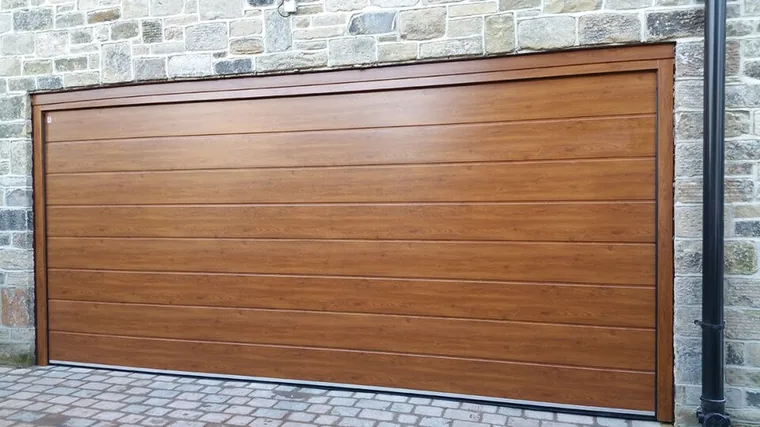
Wood doors offer unmatched natural curb appeal. Cedar, redwood, and mahogany are common. They need refinishing every 1–3 years, especially in BC’s wet winters. Moisture can cause rot and warping. Wood is the most expensive option and requires the most upkeep. But for a heritage home or a custom estate, nothing else looks as warm. With diligent maintenance, a wood door can last 15–30 years.
Composite — The Middle Ground
Composite doors (often made from wood fibers and resins) mimic wood grain but resist moisture better. They won’t rot or warp like real wood. They are heavier than steel and cost more than basic steel, but less than premium wood. Composite is a smart choice if you want wood looks with less maintenance. Lifespan is 20–30 years.
Glass — Maximum Light, Minimal Privacy
Glass doors are typically aluminum-framed with tempered or insulated glass. They are popular for modern homes and let in natural light. But they offer little privacy and less insulation unless you use double-glazed or Low-E glass. They are also heavy and require strong springs and openers. For a commercial garage door repair technician’s perspective, glass doors are common in storefronts but less so in residential.
Steel Gauge: What Thickness Do You Really Need?
Steel gauge is one of the most misunderstood specs. The lower the gauge number, the thicker the steel. Residential doors typically range from 25-gauge (thinnest) to 20-gauge (thickest). Here’s my rule of thumb:
- 25-gauge: Entry-level, economy doors. They dent easily. Fine for a rental or low-use door, but I don’t recommend for a family home.
- 24-gauge: The standard for most quality residential doors. Good dent resistance. I install these most often in Vancouver.
- 20-gauge: Heavy-duty. Used in high-wind areas or for doors that take abuse. Often found in commercial applications. Overkill for most homes, but some homeowners want the extra peace of mind.
Thicker steel also reduces noise and improves insulation slightly. In Canadian winters, a 24-gauge insulated door is a solid choice. If you’re in a coastal area, ensure the steel is galvanized and the paint is UV-resistant to prevent rust. And remember: gauge is just one factor. The quality of the hinges, rollers, and springs matters just as much. I’ve seen 25-gauge doors with excellent hardware outlast 20-gauge doors with cheap parts.
Single vs Double Garage Doors: Which Size Is Right?
Most Canadian homes have either a single (8×7 ft or 9×7 ft) or a double (16×7 ft) door. Here’s what I’ve learned:
Single Doors
Single doors are cheaper to buy and install. They are easier to operate manually if the opener fails. They also put less stress on springs and openers. For a single-car garage, this is the obvious choice. Cost for an insulated steel single door installed: roughly CAD $1,200–$2,500.
Double Doors
Double doors are more convenient for two-car garages. They give you a wider opening, making parking easier. But they are heavier, require stronger springs and openers, and cost more. A double insulated steel door installed runs CAD $2,000–$3,500. The larger door also means more potential for wind load issues in exposed areas. If you have a two-car garage, a single double door is usually more cost-effective than two singles, but two singles offer redundancy: if one breaks, the other still works.
My advice: match the door to your garage opening and your lifestyle. If you have a workshop and need frequent access, a single door with a walk-through door (or a separate man door) is handy. For pure parking, a double door is fine.
Insulation: R-Value and Canadian Winters
Insulation matters in Canada. An uninsulated garage door turns your garage into a freezer in winter and an oven in summer. If your garage is attached and you have living space above or beside it, insulation is critical for energy efficiency.
Insulation is measured by R-value. For most Canadian climates, I recommend at least R-12 for the door. Many quality insulated doors offer R-12 to R-18. Polyurethane foam insulation (used in higher-end doors) has a higher R-value per inch than polystyrene (used in budget doors). Polyurethane also bonds to the steel, adding rigidity.
Here’s a quick guide:
- Uninsulated: No R-value. Only for unheated storage. Avoid in Canada unless the garage is detached and unheated.
- Polystyrene (R-6 to R-10): Budget-friendly. Adequate for mild climates or if you don’t heat the garage.
- Polyurethane (R-12 to R-18): Best for Canadian winters. Reduces heat loss and noise. Worth the extra cost.
I’ve seen homeowners save 10–15% on heating bills after upgrading to an insulated door. Plus, it makes the garage more comfortable for workshops or gyms. When you get a quote, ask for the R-value and the type of insulation. Don’t just trust “insulated” — some cheap doors have a thin layer of polystyrene that barely helps.
Styles: Raised Panel, Carriage House, Modern Flush — Which Fits Your Home?
Your garage door style dramatically affects curb appeal. Here’s what works best for Canadian homes.
Traditional Raised Panel
This is the classic look: rectangular panels with a raised center. It suits most suburban homes, especially those with traditional architecture. It’s available in steel, wood, and composite. It’s the safest choice for resale because it appeals to the broadest range of buyers. Cost is moderate.
Carriage House
Carriage house doors mimic old swing-out barn doors but operate as overhead doors. They often have decorative hinges and handles. This style is very popular in Canada for its rustic charm. It works well with craftsman, farmhouse, and colonial homes. Available in steel (with embossed wood grain), composite, or real wood. It can cost a bit more than raised panel.
Modern Flush
Modern flush doors have a flat, smooth surface with minimal or no paneling. They are often paired with aluminum and glass. Ideal for contemporary or mid-century modern homes. They can be more expensive due to materials and design. They also show dents more easily, so steel gauge matters.
My advice: choose a style that complements your home’s architecture. A modern door on a Victorian house looks odd. And don’t forget color — white, almond, and brown are standard, but custom colors are available. For a quick style guide, check out garage door repair Burnaby technicians often see which styles hold up best in the local climate.
Realistic Installed Cost Ranges in CAD (2025)
Prices vary by region, installer, and customization. Here are typical installed costs for Greater Vancouver (including labor, hardware, and removal of old door):
- Steel (insulated, standard): Single CAD $1,200–$2,500; Double CAD $2,000–$3,500. Premium steel (thicker gauge, custom colors, windows) can go to $6,500+.
- Aluminum (with glass): Single CAD $1,500–$3,500; Double CAD $3,000–$5,000. Full-view architectural doors: $4,000–$8,000+.
- Wood (cedar or mahogany): Single CAD $2,500–$4,500; Double CAD $4,000–$6,500. Custom wood can exceed $12,000.
- Composite: Single CAD $2,500–$4,000; Double CAD $4,000–$6,500.
- Glass (aluminum frame): Similar to aluminum with glass — $1,500–$4,000 for basic, up to $8,000+ for architectural.
These are installed prices including standard opener? Usually not — openers add CAD $400–$800 installed. Spring upgrades, insulation upgrades, and window inserts add cost. Always get at least three quotes from licensed, insured installers. Beware of prices that seem too low — you get what you pay for in hardware and workmanship.
Lifespan and Maintenance: How Long Will Your Door Last?
With proper maintenance, here are realistic lifespans:
- Steel: 15–30 years. Rust is the main enemy. Wash annually, touch up paint chips, lubricate hinges and springs twice a year.
- Aluminum: 10–25 years. Finish can fade or chalk. Clean with mild soap. Glass panels may need replacement if broken.
- Wood: 15–30 years with diligent refinishing every 1–3 years. Neglect leads to rot and warping.
- Composite: 20–30 years. Low maintenance — occasional washing. Can fade in sun.
- Glass: 10–20 years. Seals can fail, causing fogging. Aluminum frames can corrode in salt air.
Springs typically last 10–15 years (or 10,000 cycles). Openers last 10–15 years. Cables and rollers wear out sooner. I recommend annual professional inspection. Many garage door repair in Vancouver companies offer maintenance packages. A well-maintained door lasts longer and operates safely.
Resale Value: What Return Can You Expect?
A new garage door offers one of the highest returns on investment for home improvements. In Canada, you can expect to recoup 75–95% of the cost at resale, according to real estate sources. A high-quality steel or composite door in a classic style (raised panel or carriage house) appeals to the most buyers.
Factors that boost resale value:
- Insulation: Buyers in cold climates value energy efficiency.
- Style matching: A door that complements the home’s architecture.
- Neutral colors: White, beige, gray, or black — not bright red.
- Modern safety features: Photo eyes, auto-reverse, smart opener compatibility.
On the flip side, an outdated or damaged door can reduce offers. If you’re selling, a new door is a smart investment. Even if you’re staying, the curb appeal and energy savings justify the cost. For a quick estimate of your home’s value impact, ask a local realtor. And if your current door needs commercial garage door repair (if you have a large or specialty door), a pro can advise on whether repair or replacement is better for resale.
Frequently Asked Questions
What is the best garage door material for a Canadian climate?
Insulated steel (24-gauge) is the best all-around choice for most of Canada. It offers durability, low maintenance, and good insulation. For coastal areas, aluminum resists salt corrosion better.
How much does a new garage door cost installed in Vancouver?
For a standard insulated steel single door, expect CAD $1,200–$2,500 installed. A double door runs $2,000–$3,500. Premium materials like wood or custom glass can exceed $8,000.
Do I need an insulated garage door in BC?
Yes, if your garage is attached to your home. Insulation (R-12 or higher) reduces heat loss, saves energy, and makes the garage more usable in winter. Even in mild BC, it helps.
How long does a garage door last?
With proper maintenance, steel and composite doors last 15–30 years, wood 15–30 years with care, aluminum 10–25 years, and glass 10–20 years. Springs and openers typically need replacement sooner.
Sources & Further Reading
- RE/MAX Canada — home value insights
- Canadian Home Builders' Association
- Altus Group — Canadian cost guide
- Reno Assistance (Canada)
Need a Hand From a Real Technician?
Same-day garage door repair across Greater Vancouver — no call-out fee, written estimate before we start.
call Call 778-805-4911